Where Did Aldi and Trader Joe's Originate? The Surprising History Behind the Groceries
Few grocery chains inspire the devotion found in Aldi and Trader Joe’s parking lots. While Aldi sticks to its no-frills, efficient German formula, Trader Joe’s cultivates a beach-side-bohemian vibe with its ever-changing aisles. Yet, despite their polar opposite strategies, both chains answer a similar question with the same origin story: how do you thrive by not trying to be everything to everyone?
The Aldi Origin Story: From Family Feud to Global Efficiency
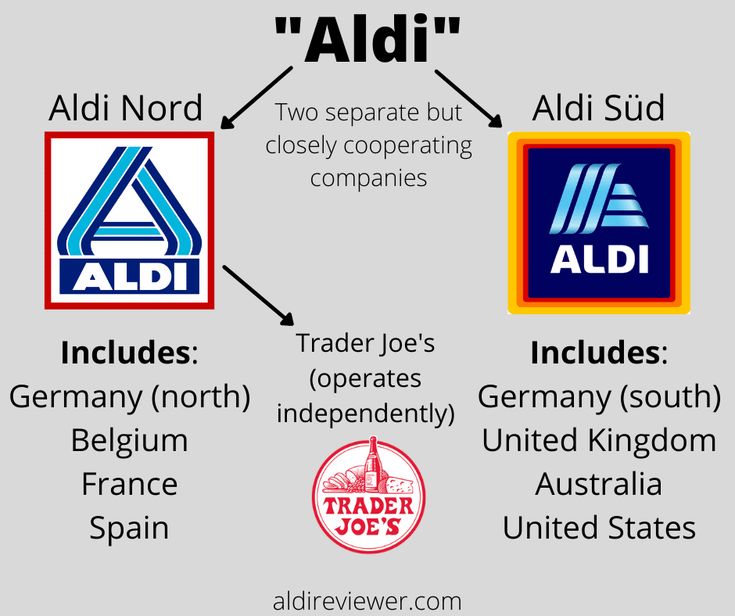
The Aldi story begins not with a marketing pitch, but with a family disagreement in Essen, Germany, in 1913. The Schwarz family was running a small grocery stall when the brothers Karl and Theo took the business over in 1945, following the devastation of World War II. Their first major divergence in philosophy came in 1960, when they split the business over a seemingly trivial issue: whether to sell cigarettes.
Karl wanted to add them for extra revenue, while Theo refused, believing cigarettes contradicted the company’s health-conscious, low-cost ethos. This philosophical split created Aldi Nord (Theo’s northern division) and Aldi Süd (Karl’s southern division). While they operate independently in many regions today, they share the same core DNA: a fanatical focus on operational excellence and keeping prices permanently low.


Discipline and the Private Label
Aldi’s rise was fueled by two revolutionary concepts: the strict limited assortment and the dominance of private label brands. By offering only 500 carefully curated products instead of the thousands found in traditional supermarkets, Aldi slashed costs associated with ordering, stocking, and managing inventory. Shoppers weren’t overwhelmed by choice; they were handed a guaranteed value.
Furthermore, Aldi forced suppliers to produce high-quality versions of staple items under the store brand. This eliminated the massive marketing budgets national brands spent on advertising, savings that were passed directly to the customer. The formula was so effective that Aldi Süd expanded internationally in the 1970s, eventually evolving into the global giant Aldi is today.


Trader Joe’s: The California Counter-Culture Grocer
Trader Joe’s story originates on the sun-drenched streets of Pasadena, California, in 1958. Originally founded by Joe Coulombe as a convenience store chain called Pronto Markets, the trajectory shifted dramatically in 1979. Facing pressure from larger competitors, Coulombe took inspiration from an obscure German discount chain called Aldi.
He saw the potential of the no-frills model but knew American consumers weren’t ready for bare-bones aesthetics. He needed to add "soul" to the efficiency. Coulombe acquired the chain and began the transformation into the Trader Joe’s we recognize, filling the aisles with unique products, adventurous flavors, and a sense of discovery that Aldi deliberately avoids.
The Captain and the Crew
Aldi treats its staff as hourly employees focused on efficiency. Trader Joe’s treats its staff as "Crew Members" and, more importantly, as the face of the experience. Captains (managers) are encouraged to be approachable and humorous, while the crew is empowered to interact freely with customers.


This focus on employee autonomy and personality creates a distinctively warm and humorous shopping environment. The famous "Ah, Nuts!" banter, the willingness to give out free samples of anything, and the quirky product names all stem from a top-down culture that values joy and engagement over rigid corporate protocol.
Contrasting Philosophies, Shared Success
Looking at their origins reveals why these giants rarely collide directly. Aldi is the embodiment of German engineering applied to retail: it is systematic, predictable, and unchanging. Its growth is methodical, opening new locations based on cold, hard demographic analysis.
Trader Joe’s, however, feels like an adventure. Its locations are often chosen for their proximity to coastal, liberal, or bohemian demographics. Its product rotation is a mystery, even to its employees, creating a shopping trip that feels unique every time. One prioritizes consistency, the other thrives on surprise.


Sparing the customer service; carts and bags require a quarter
Chatty crew, abundant samples, and a theatrical vibe
| Aspect | Aldi | Trader Joe's |
|---|---|---|
| Origin | Family split in Germany (1960) | Acquisition of Pronto Markets in California (1979) |
| Core Philosophy | Absolute efficiency and low cost | Adventure, quality, and experience |
| Product Selection | Rigidly limited (approx. 1,000 items) | Rotating and seasonal (approx. 3,000 items) |
| Private Label Standardized, consistent quality | Creative, gourmet, and experimental | |
| Store Experience |
Ultimately, the legacies of Aldi and Trader Joe’s are defined by their founders’ refusal to follow the beaten path. The German brothers challenged the necessity of excess, while the American captain challenged the necessity of boredom. They took opposite routes to the same destination: proving that in the crowded landscape of supermarkets, success belongs to those who dare to be different.
Related Articles

The Origin of Stockings: The Surprising History Behind the Christmas Tradition
The image of a Christmas stocking hung above a fireplace or resting by a bed is a familiar part of the holiday season, yet its origins trace back through...

Where Did Postcards Originate: The Fascinating History Behind the Card
The origin of postcards can be traced back to the 19th century, a time when communication was rapidly evolving, and people were eager to share their...

The Origin of Stockings: A History Behind the Holiday Tradition
The humble stocking, a staple of winter wardrobes and holiday celebrations, has a history that stretches back centuries. Often viewed as a simple vessel for...
The Origin Story of Trader Joe's: Where Did the Favorite Grocery Store Come From?
While today Trader Joe’s feels like an inevitable part of the American grocery landscape, with its distinctive nautical aesthetic and cheerful crew members...

The Fascinating Origin of Fishnet Stockings: History & Evolution
Fishnet stockings, with their distinct diamond-shaped webbing, occupy a curious space in fashion history. They are simultaneously associated with high-glamour...

The Secret Story Behind Trader Joe's Name: How Did Trader Joe's Get Its Name?
Few grocery store chains inspire the same level of curiosity and devotion as Trader Joe's. With its unique product offerings, quirky in-store commentary, and...