20+ Tiered Garden Landscape Ideas for a Stunning Vertical Oasis
Tiered garden landscapes are a stunning way to maximize space and create visual interest. By incorporating different levels, you can add depth, dimension, and a touch of drama to your outdoor space. Let's explore some captivating tiered garden landscape ideas that blend functionality with aesthetic appeal.
Understanding Tiered Garden Landscapes
Tiered garden landscapes, also known as multi-level or terraced gardens, involve creating distinct levels or platforms in your garden. These levels can be separated by steps, retaining walls, or changes in elevation. The key to a successful tiered garden is to ensure each level flows seamlessly into the next, creating a harmonious and cohesive design.
Benefits of Tiered Garden Landscapes
- Space Maximization: Tiered gardens allow you to make the most of sloped or uneven terrain, creating additional planting areas and usable space.
- Visual Interest: The varying heights and levels create a dynamic and engaging garden design that draws the eye in and encourages exploration.
- Privacy and Screening: Retaining walls and elevated beds can provide privacy and screen unsightly views, such as neighboring properties or busy streets.
- Water Management: Tiered gardens can help control water runoff, preventing erosion and protecting your plants from excessive waterlogging.
Designing Your Tiered Garden
Before you start digging, consider the following design aspects to ensure your tiered garden is both functional and visually appealing:


Assess Your Site
Evaluate the natural slope and contours of your garden. Identify any existing features, such as trees or large shrubs, that could influence your design. Also, consider the aspect (direction your garden faces) and how this might impact sunlight and planting choices.
Plan Your Levels
Decide on the number of tiers and their approximate heights. A good rule of thumb is to keep the difference between each level to a comfortable stepping height, typically around 18-24 inches (45-60 cm). Sketch out your design, including the placement of steps, paths, and planting areas.


Choose Your Materials
Select durable, low-maintenance materials for your retaining walls and steps. Natural stone, brick, or concrete blocks are popular choices. Consider the overall aesthetic of your garden and choose materials that complement your home's architecture and surrounding landscape.
Tiered Garden Landscape Ideas
Now that you have the basics of designing a tiered garden, let's explore some inspiring ideas to help you create a truly unique and captivating outdoor space.
Staired Terraces
Staired terraces create a grand, sweeping effect, perfect for larger gardens. Each level can be planted with a different theme or color scheme, allowing you to showcase a variety of plants and create a sense of journey as you move through the space.


Raised Beds
Raised beds are an excellent option for small gardens or areas with poor soil. They allow you to create distinct planting areas and add height and structure to your garden. Consider using different heights and materials to create visual interest and break up the space.
Cascading Water Features
Integrate cascading water features, such as ponds, streams, or waterfalls, into your tiered garden design. These features not only add a soothing soundtrack to your garden but also create a stunning focal point and help connect the different levels.
Seating and Lounging Areas
Create inviting seating and lounging areas on each tier of your garden. This could be as simple as a few steps or as elaborate as a built-in bench or daybed. Incorporate comfortable, weather-resistant furniture and accessories to make the most of your outdoor space.


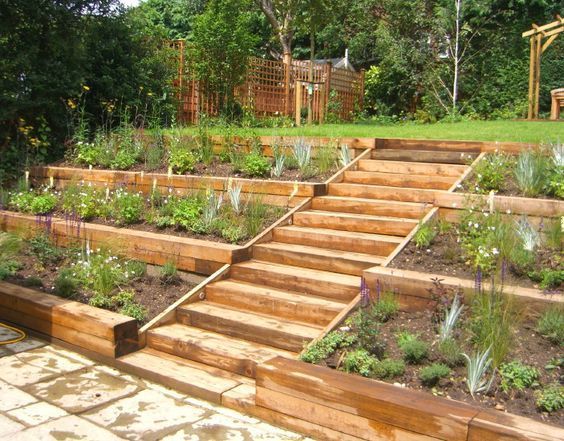


Vertical Gardening
Maximize space and add visual interest by incorporating vertical gardening elements into your tiered garden design. Trellises, arbors, and green walls can be used to grow climbing plants, such as roses, clematis, or ivy, and create striking focal points.
Planting Your Tiered Garden
When it comes to planting your tiered garden, consider the following tips to create a cohesive and harmonious design:
- Repeat Planting: Use repeating plants throughout your garden to create unity and flow between the different levels. This could be a particular shrub, tree, or ornamental grass.
- Plant for Height: Incorporate plants of varying heights to create a sense of depth and dimension. Taller plants can be used to screen unsightly views or create a focal point, while shorter plants can be used to fill in gaps and add texture.
- Consider Light Levels: Be mindful of the light levels on each tier of your garden. Plants that require full sun may not thrive in shadier, lower-level areas.
- Use Containers: Incorporate containers into your design to add color, texture, and flexibility. Containers can be used to grow plants that may not thrive in your garden's soil or to add a pop of color to a particular area.
By following these tiered garden landscape ideas and incorporating a mix of hardscaping and planting elements, you can create a stunning and functional outdoor space that maximizes your garden's potential. So, grab your garden gloves and start digging – your dream tiered garden awaits!
Related Articles

20+ Stunning Tiered Planter Ideas for a Vertical Garden Oasis
Tiered planters are a fantastic way to maximize your gardening space, create visual interest, and display your plants in style. They're perfect for both indoor...

Tiered Flower Pot Ideas: 15 Stunning Vertical Garden Designs
Elevate Your Gardening Game: Tiered Flower Pot Ideas In the world of gardening, vertical space is often the limiting factor. However, with tiered flower pot...

10 Stunning Perennial Full Sun Garden Ideas for a Vibrant, Low-Maintenance Oasis
Creating a Vibrant Perennial Full Sun Garden: Ideas and Inspiration Transform your outdoor space into a lush, colorful oasis with these perennial full sun...

Stunning Palm Tree Landscape Ideas for Tropical Oasis
Transforming your outdoor space with palm tree landscape ideas can instantly transport you to a tranquil oasis, blending dramatic vertical elements with lush...

Stunning Pool Garden Bed Ideas for a Lush Oasis
Transforming the area around your pool into a functional and beautiful garden is one of the most impactful upgrades a homeowner can make. A pool garden bed...

Garden Pond Waterfall Ideas: 10 Stunning Designs for Serene Outdoor Oasis
Transform Your Garden with These Enchanting Pond Waterfall Ideas Imagine the soothing sound of trickling water as you relax in your garden. A pond waterfall...