Maximize Small Kitchen Space: Ultimate Guide on How to Store Large Appliances
Maximizing space in a compact kitchen requires strategic planning, especially when you need to accommodate large appliances like a stand mixer, slow cooker, or coffee maker. The goal is to integrate these essential tools seamlessly into the environment without sacrificing workflow or aesthetic appeal. By assessing your specific needs and measuring your space with precision, you can create a system that allows for easy access while maintaining a sense of order.
Evaluating Your Essential Items and Layout
The first step to organizing large appliances is a clear inventory of what you actually use on a daily or weekly basis. Treat your kitchen design like a professional workspace, where every piece of equipment must justify its footprint. Measure the dimensions of each appliance, paying close attention to height, depth, and width, as these will dictate where they can physically fit. Consider the "landing zone" concept, which is the necessary counter space required on either side of the appliance for safe operation and cleaning.
Prioritizing Frequency of Use
Not all large appliances earn their keep equally. A convection oven used daily deserves prime real estate, while a rarely used deep fryer might be better stored elsewhere. Rank your appliances based on utility, and prioritize the layout for the top three to five items. This ensures that your most critical tools are always accessible, streamlining your cooking process and reducing the need to constantly move bulky items around the kitchen.


Optimizing Vertical and Under-Utilized Space
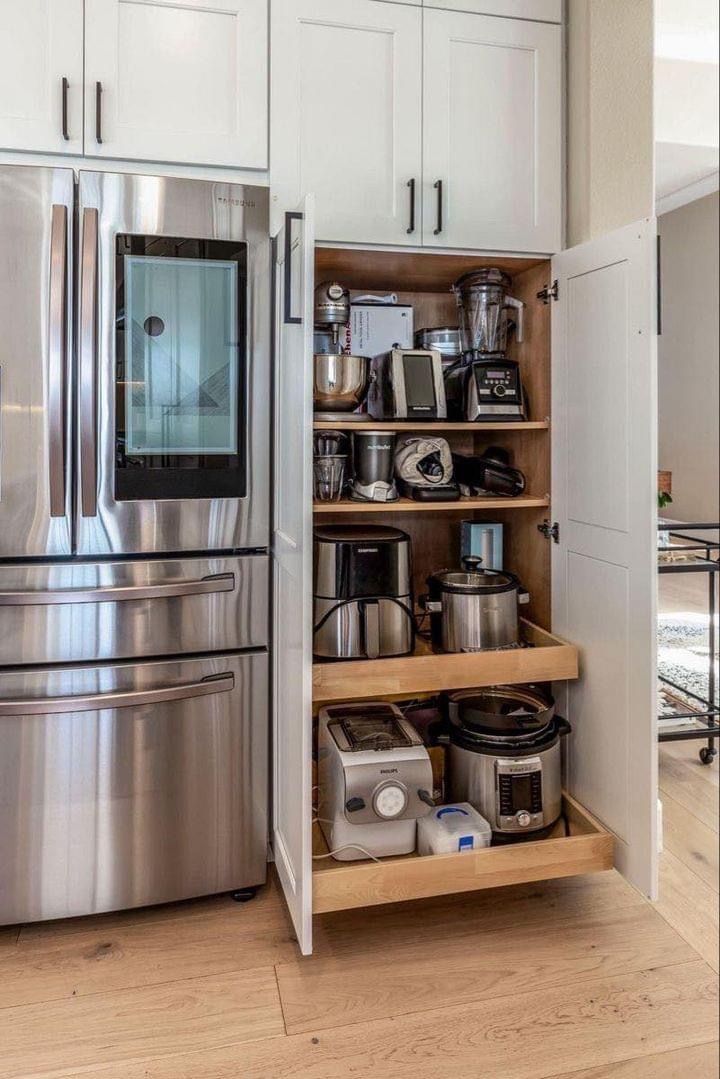
When counter space is at a premium, looking up and down becomes essential. Tall cabinets or open shelving can provide a home for appliances like blenders or food processors when not in use, keeping them visible but out of the primary workflow. Similarly, under-counter spaces—such as the area beneath a breakfast bar or a dedicated pull-out cabinet—can be ideal for storing heavier items like mixers, effectively keeping them off the main counters.
| Appliance Type | Recommended Storage Location |
|---|---|
| Stand Mixer | Under-counter cabinet, rolling cart, or dedicated ledge with access |
| Coffee Maker | Countertop near power source, upright on a mat or inside a cabinet with lift |
| Slow Cooker / Instant Pot | Tall cabinet, under-counter space, or rolling shelf |
Investing in Smart Storage Solutions
Custom cabinetry and modular systems can transform a chaotic kitchen into an efficient one, but these solutions require an investment. Sliding shelves, also known as lazy Susans, placed in corner cabinets allow you to pull the appliance forward without having to navigate awkward angles. Reserving specific drawers or cabinets for specific appliances prevents the "junk drawer" effect, where essentials become buried under miscellaneous items.


The Role of Mobile Carts
For kitchens lacking permanent space, a small kitchen island or utility cart offers exceptional flexibility. These mobile units allow you to bring the appliance to you when needed and then roll it away to clean or open up floor space. Choose a cart with multiple tiers to maximize storage, ensuring that the footprint remains light despite the storage capacity.
Maintaining Flow and Safety
Safety and ergonomics should always guide storage decisions. Heavy appliances should be stored below waist height to prevent strain when lifting, or securely placed on low, stable surfaces to avoid tipping hazards. Ensure that cords can reach the outlet without creating a tripping hazard, and that vents are not blocked by cabinetry, which could lead to overheating and reduce the lifespan of the device.
Ultimately, storing large appliances in a small kitchen is about balance: functionality versus aesthetics, accessibility versus space savings. By treating your storage strategy with the same importance as the meal you are preparing, you can turn a limitation into an opportunity for a more organized and inspiring culinary environment.




Related Articles

Maximize Your Space: Ultimate Guide on How to Deal With a Small Kitchen
Living in a small kitchen can feel like navigating a well-worn shoebox, where every inch is claimed and every movement requires intention. The reality...

Maximize Small Freezer Space: The Ultimate Guide to How to Store Breast Milk
Mastering Breast Milk Storage in Small Freezers Storing breast milk safely is a crucial aspect of ensuring your baby continues to receive the best nutrition...

The Ultimate Guide to Organizing Kitchen Counter Appliances: Maximize Space & Style
An organized kitchen counter is less about sterile perfection and more about cultivating a workspace that invites you to cook. The clutter of miscellaneous...

Maximize Space: The Ultimate Guide to How to Store Cans in Cupboard
Storing cans in your cupboard efficiently and safely is a crucial step in maintaining a well-organized and hygienic kitchen. With the right techniques, you can...

The Ultimate Guide to Storing Bags in Wardrobe: Maximize Space & Organization
Few tasks in home organization are as satisfying as optimizing wardrobe space, and learning how to store bags in wardrobe is a cornerstone of this process...

Maximize Space & Prevent Mustiness: The Ultimate Guide on How to Store Winter Clothes in Basement
Maximizing Space and Preserving Quality: A Comprehensive Guide to Storing Winter Clothes in Your Basement As the seasons change, so do our wardrobes. Winter...